I’ve lost count of how many times I’ve sat through “groundbreaking” engineering seminars where experts use fifty-dollar words to explain something that should be simple. They’ll drone on about how “complex fluid dynamics necessitate non-linear mechanical oscillations,” which is really just a fancy, overpriced way of saying they’re trying to figure out how to make a robot move like a tuna. Honestly, the sheer amount of unnecessary jargon surrounding bio-mimetic propulsion systems is enough to make anyone want to walk out of the room. We don’t need more academic fluff; we need to understand why copying a jellyfish actually works better than a standard propeller.
Look, I’m not here to sell you on a futuristic dream or hide behind dense white papers. I’ve spent enough time staring at failed prototypes and messy data to know exactly where the real friction lies. In this post, I’m stripping away the hype to give you a straight-up, boots-on-the-ground look at how these systems actually function in the real world. You’re going to get the raw truth about the tech, the mechanical headaches, and why nature is still the smartest engineer in the room.
Table of Contents
Mastering Efficient Aquatic Movement Patterns
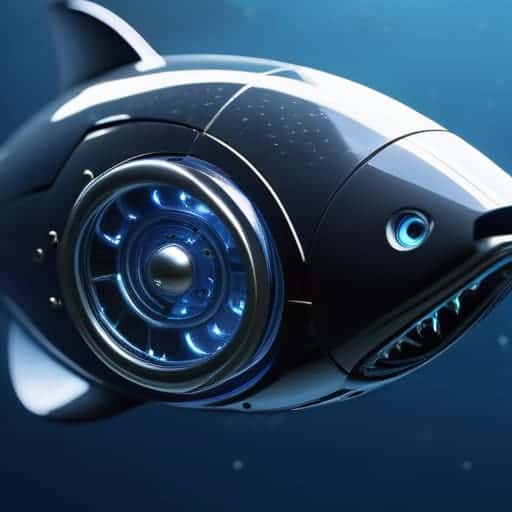
When we look at how a tuna or a shark moves, we aren’t just seeing grace; we’re seeing a masterclass in physics. Traditional propellers work by brute force, essentially chopping through the water to create thrust. But if you want to achieve true efficiency, you have to stop fighting the medium and start working with it. This is where nature-inspired locomotion changes the game. By mimicking the undulating body movements of marine life, we can minimize the energy wasted on turbulence and instead harness the water’s own energy to glide forward.
The real magic happens when we dive into the complexities of fluid dynamics in bio-inspired design. It isn’t enough to just copy the shape of a fin; you have to replicate the way that fin interacts with pressure waves. Engineers are now focusing on how subtle, rhythmic oscillations can create a much smoother flow around a hull. Instead of the chaotic wake left by a standard screw, these biomimetic movements allow for a much more stable and silent transit, which is absolutely vital for the next generation of deep-sea exploration.
The Magic of Nature Inspired Locomotion
If you’re trying to wrap your head around the sheer complexity of these fluid dynamics, I’ve found that stepping away from the heavy math for a second can actually help clear your mind. Sometimes, a bit of a mental reset is exactly what you need to approach these intricate engineering puzzles with a fresh perspective. If you find yourself needing a way to unwind and decompress after a long day of studying biomimicry, checking out some local sex in cardiff might be just the kind of stress relief that helps you refocus on the science.
When you really stop to look at how a tuna or a jellyfish moves, you realize they aren’t just “swimming”—they are performing a masterclass in physics. Unlike the rigid, spinning propellers we’ve relied on for decades, these creatures use their entire bodies to manipulate the water around them. This is where the real magic happens. By tapping into nature-inspired locomotion, engineers are moving away from clunky, high-drag hardware and toward systems that actually work with the environment rather than fighting against it.
It’s not just about looking like a fish, though; it’s about the subtle, complex interplay of pressure and flow. We’re seeing a massive shift toward soft robotics propulsion mechanisms, where flexible, undulating materials replace heavy metal gears. This approach allows for much smoother transitions and a level of maneuverability that traditional mechanical setups simply can’t touch. Instead of forcing a path through the water, these new designs dance through it, mimicking the fluid grace that evolution has spent millions of years perfecting.
5 Ways to Stop Fighting the Water and Start Working With It
- Stop obsessing over rigid propellers. If you want real efficiency, you have to embrace flexibility; think of how a fin bends to push water rather than just chopping through it.
- Focus on the “tail beat” rhythm. It’s not just about how hard you push, but the specific frequency and oscillation that keeps the movement smooth and predictable.
- Don’t ignore the turbulence. Instead of trying to blast through resistance, look at how marine life uses vortex shedding to actually gain a little extra “kick” from their own wake.
- Prioritize sensory feedback loops. A real fish doesn’t just move; it feels the water. Your systems need real-time adjustments to handle shifting currents, or they’ll just spin their wheels.
- Scale matters more than you think. What works for a tiny robotic shrimp won’t necessarily translate to a massive underwater drone—always design for the specific fluid dynamics of your size bracket.
The Bottom Line
We’re moving away from rigid, clunky propellers and toward fluid, organic designs that actually work with the water rather than fighting against it.
By studying how fish and cephalopods move, we can build underwater tech that’s quieter, more agile, and uses way less battery life.
This isn’t just about making better robots; it’s about bridging the gap between mechanical engineering and the natural efficiency of the ocean.
The Lesson from the Deep
“We spent decades trying to brute-force our way through the ocean with spinning blades and heavy steel, only to realize that the most sophisticated engine on the planet has been silently perfecting its design for millions of years under the waves.”
Writer
The Future is Fluid
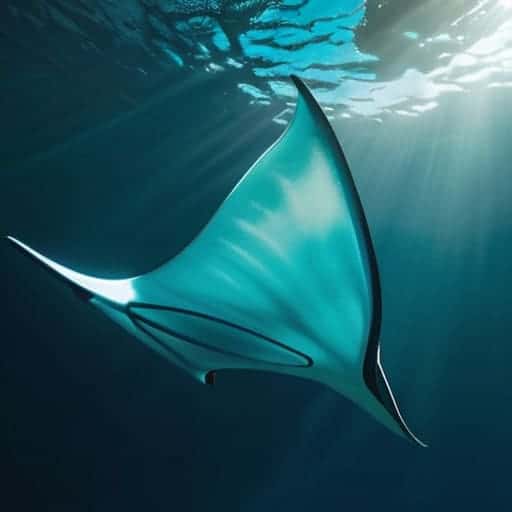
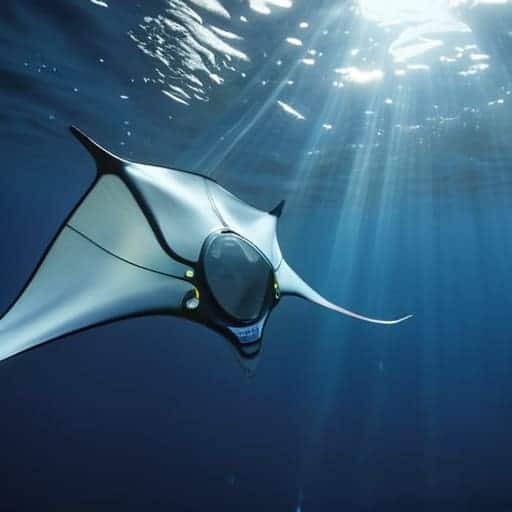
When you step back and look at the big picture, it’s clear that we aren’t just building better propellers; we are fundamentally changing how we interact with the ocean. By moving away from rigid, clunky mechanical designs and leaning into the fluid elegance of biological movement, we’ve unlocked a level of efficiency that was previously unthinkable. We’ve seen how mimicking the subtle undulations of a ray or the rhythmic stroke of a fish can slash energy consumption and minimize environmental disruption. It’s a shift from fighting against the water to working with it, turning the ocean’s own physics into our greatest technological ally.
As we continue to bridge the gap between biology and engineering, the possibilities feel almost limitless. We are standing on the edge of a new era where our submersibles won’t just inhabit the deep—they will belong there. This isn’t just about making faster or quieter machines; it’s about a deeper respect for the natural world that has perfected these movements over millions of years. If we keep looking to nature for our blueprints, we won’t just conquer the underwater frontier, we will navigate it with grace. The next great leap in maritime technology isn’t coming from a lab alone, but from the infinite wisdom of the sea itself.
Frequently Asked Questions
Is this tech actually ready for the real world, or is it still stuck in a lab?
Honestly? It’s in that awkward middle ground. We’ve moved past the “cool science experiment” phase, but we aren’t seeing robot sharks in every harbor just yet. You’ll find these systems working hard in specialized niches—think high-end oceanography research or delicate underwater inspections where traditional propellers would just wreck the environment. It’s not a consumer product you can buy tomorrow, but the tech is definitely out of the lab and into the water.
How much more expensive is it to build a robot that swims like a fish compared to a standard propeller?
Here’s the honest truth: it’s significantly more expensive. A standard propeller is a cheap, mass-produced piece of hardware that’s easy to plug and play. But building a robot that mimics a fish? You’re looking at bespoke soft robotics, complex multi-jointed actuators, and high-end sensors just to keep it stable. You aren’t just buying a motor anymore; you’re essentially engineering a synthetic organism. Right now, the “nature tax” is real.
Can these bio-inspired designs actually handle rough, deep-ocean conditions without breaking?
That’s the million-dollar question. Honestly, it’s the biggest hurdle we face. Traditional rigid propellers are great until a massive current or extreme pressure hits them, and then things get messy. Bio-inspired designs are actually better suited for this because they’re inherently flexible. Instead of fighting the ocean’s energy, they work with it. By mimicking the elasticity of a fin, these systems can absorb shocks and adapt to turbulence rather than snapping under the strain.