Did you know the global cloud gaming market is set to hit $8 billion by 2028? This rapid growth shows a big change in how we play games. More people are choosing game streaming for its ease over playing games locally.
In our digital world, where ease and quality matter most, the Cloud Gaming vs Local Play debate is heating up. Cloud gaming lets you play a wide range of games on different devices without spending a lot on hardware. It also means no long waits for downloads.
On the other hand, local play keeps a special spot for those who love the real feel of gaming. It offers a deep, personal experience that can’t be beat. In this piece, I’ll look at the good and bad of both sides. This will help you decide which way is best for you as we move forward in gaming.
Key Takeaways
- Cloud gaming is projected to exceed $8 billion by 2028.
- Local play offers an immersive, nostalgic experience for gamers.
- Cloud gaming allows access to extensive game libraries without expensive hardware.
- Performance and accessibility are critical factors in the gaming debate.
- Game streaming provides convenience for on-the-go gaming enthusiasts.
- Understanding both models is key to making an informed choice.
Understanding Cloud Gaming
Cloud gaming has changed how we play video games. It uses cloud computing to let players stream games without needing expensive hardware. This way, even devices that aren’t top-notch can show off high-quality graphics.
What is Cloud Gaming?
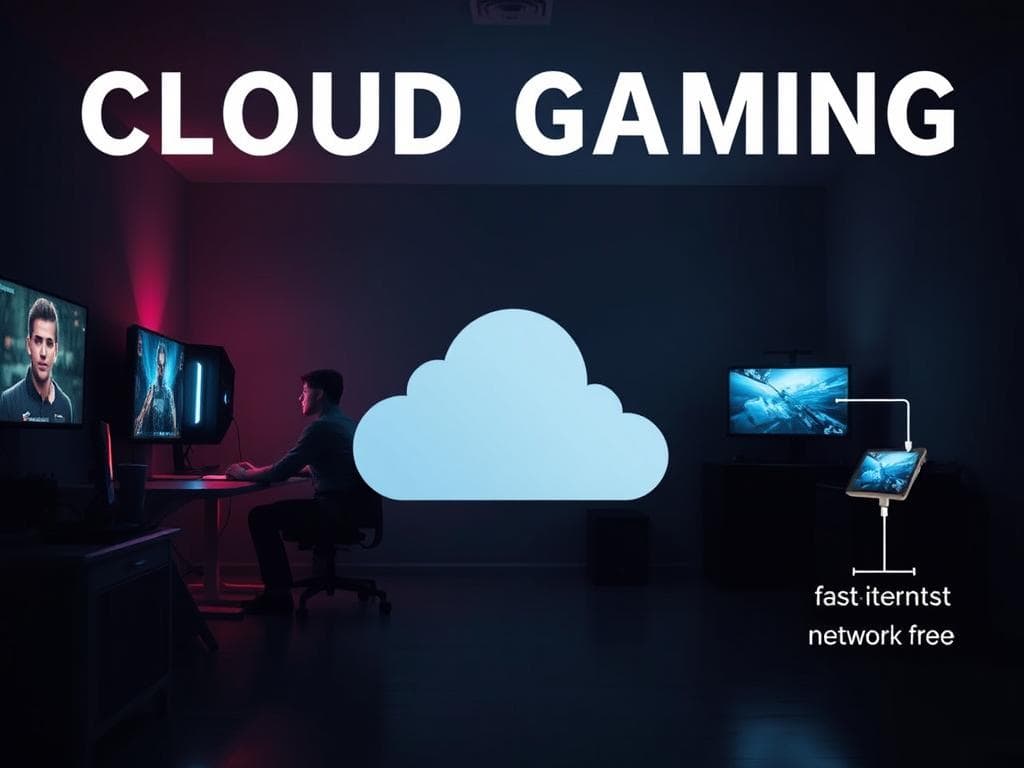
Cloud gaming lets users play games online, streaming them to their devices. It means no need to download or install games. Instead, users can dive into a huge library of games instantly.
This technology uses powerful servers to handle the game’s demands. It makes gaming more accessible, even for those without pricey consoles.
Pros and Cons of Cloud Gaming
Cloud gaming’s biggest plus is its flexibility. Gamers can play on many devices without needing top-notch hardware. This makes gaming more inclusive.
Another big plus is the ability to start playing games right away. No need to wait for downloads or installations. Subscription services also offer a wide range of games, making it cost-effective for gamers.
But, cloud gaming has its downsides too. A big issue is the need for high-speed internet. Without it, games can freeze or lag, ruining the experience. High data usage is another problem, which can be a worry for those with small data plans.
There’s also the question of game ownership. Players might lose access to games if they stop their subscription. Choosing from many subscription options can also be confusing, adding to the complexity of the experience.
Exploring Local Play
Local play, or traditional gaming, means playing video games on personal devices like consoles or PCs. It lets me own games and control my library. This model also boosts social interaction, creating rich experiences with others.
Knowing the good and bad sides of local play shows why it’s loved today.
What is Local Play?
Local play means playing games without the internet. It uses special hardware to run games stored on my devices. This method is known for its strong connection between players and their games.
Pros and Cons of Local Play
The benefits of traditional gaming are clear. Games run smoothly on my hardware, giving me reliable play. The graphics are better, making games look more vivid. Plus, owning games means I can play them anytime, offline.
But, there are downsides too. Buying top-notch gaming gear can be expensive. Keeping it updated also costs money. And, setting up big games can take a lot of time, slowing down my gaming pace.

Local play is key to community culture, helping build strong bonds. It makes me feel part of a group, as we play together. This value of traditional gaming is why many stick with it, even with cloud gaming around.
Cloud Gaming vs Local Play
Cloud gaming and traditional gaming have different roles in today’s gaming world. Cloud gaming uses remote servers to play games, making it possible to play on many devices without needing top-notch hardware. Your device mainly shows the game, while the server handles the heavy work.
On the other hand, traditional gaming runs directly on your console or gaming PC. It uses your device’s power for a more immersive experience.
When it comes to convenience, cloud gaming is hard to beat. It lets you play games on many devices without spending a lot on hardware. This is great for those who can’t afford expensive gaming gear.
But, traditional gaming has its perks. It requires a bigger upfront cost but offers better graphics and quicker responses.
Latency is another key factor. Local play usually has much lower latency, which is key for fast games. Cloud gaming, though, can have higher latency due to internet quality and server distance.
Cloud gaming also makes sure you always have the latest game versions ready to go. This means no waiting for updates or storage issues. Traditional gaming, on the other hand, requires you to handle updates and storage yourself.
Looking at costs, cloud gaming is often cheaper. It uses a subscription or pay-per-play model, which saves you money upfront. Traditional gaming, though, means buying consoles, PCs, or mobile devices, which adds up over time.
Conclusion
Looking ahead, cloud gaming is changing how we play video games. It makes games more accessible and lets us play on many devices without expensive hardware. This opens gaming to more people, letting them enjoy a wide range of games through subscription services.
But traditional gaming is also special. Fans love its reliability and the deep experiences consoles like the PlayStation 5 Pro offer. Even with challenges like fewer big releases and higher costs, companies like Nintendo and Sony keep working to meet gamer needs.
In the end, I think cloud gaming and traditional gaming will both be around. They offer a wide range of choices for everyone. As technology gets better, we’ll see a future where everyone finds something they love to play, no matter their budget.