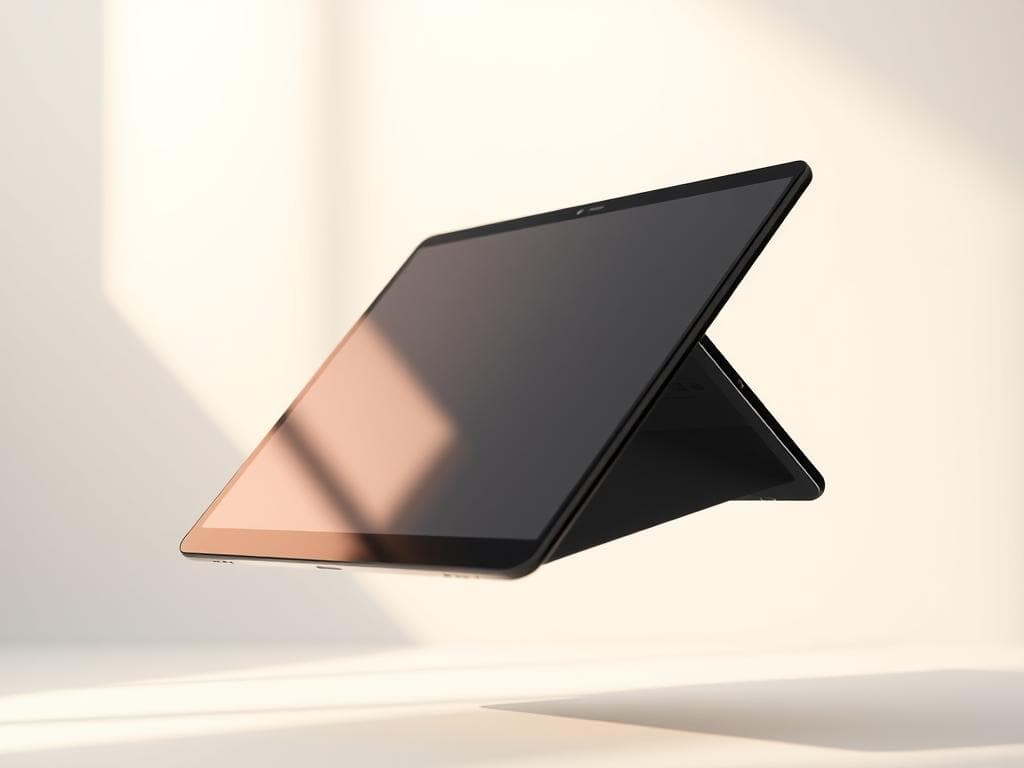
Did you know the global tablet market is set to hit $100 billion by 2026? Technology keeps advancing, and Next-Gen Foldable Tablets are at the forefront. They aim to blend smartphone ease with tablet power in a flexible package.
This innovation boosts portability and introduces new ways to use our devices. In this article, we’ll dive into the latest developments. We’ll see if these gadgets can become a big part of our digital lives.
Key Takeaways
- Foldable tablets aim to merge smartphone convenience with tablet functionality.
- The market for tablets is expected to surpass $100 billion by 2026.
- Current innovations are pushing the boundaries of display technology.
- Foldable screens are designed to be both portable and versatile.
- Consumer acceptance is key to the success of these devices.
The Rise of Next-Gen Foldable Tablets
As I look into the world of foldable tablets, I see a big change in tablet design. New screens that bend and flex are changing how we use tech. Companies like Samsung and LG are leading the way with devices that amaze and excite us.
Current Innovations in Foldable Display Technology
CES 2023 showed us amazing innovative displays that can fold and bend. Samsung’s Flex Hybrid is a great example, growing from 10.5 inches to 12.4 inches. These screens let us see more and change how we use them, making everything smoother.
The Advantages of Flexible Screens
Flexible screens make tablets more useful and fun. They’re made to be easy to carry and use in different ways. This lets us do more with less, making our tech more flexible and fun to use.
Key Players and Their Concepts
In the fast-changing world of foldable tablets, Samsung and LG are leading the way. They are bringing new ideas to the table with Samsung’s foldable tech and LG’s display advancements. This means we get to see the latest in tablet designs.
Samsung’s Remarkable Foldable Prototypes
Samsung has shown off some amazing prototypes. These designs can change from small to big screens. They show Samsung’s commitment to making devices that can do it all.
These prototypes can adjust to fit different needs. Whether you want to watch movies or browse the web, Samsung has you covered.
LG’s Innovations in the Foldable Space
LG has made some big moves in foldable tech. They’ve created a 17-inch foldable display. This is a big step for portable tech.
This display is meant to be a flexible external monitor. It shows LG’s goal to change how we use displays. They want to make our experiences better with foldable tablets.
Challenges Facing Foldable Tablets
The path to making foldable tablets popular is full of obstacles. High prices and engineering issues make people hesitant to buy them. Devices start at $1,500, which is a lot of money.
Many people think these tablets are not worth it. They compare them to cheaper traditional tablets that work just as well.
Consumer Hesitance and Market Adoption
One big problem is how expensive these tablets are. They have cool tech, but it costs a lot. This makes people think twice before buying.
Smartphones that cost less can do a lot of things these tablets can. This makes it hard for tablet makers to sell their products.
Design and Engineering Hurdles
Designing these tablets is also a big challenge. They use thin glass and special hinges, which can break easily. Samsung’s early models had screen problems, which scared off buyers.
The hinges are tricky to make and can break. This makes people worry about how long these tablets will last. It’s hard to get people to trust them.
Conclusion
As I conclude this look into the future of foldable tablets, it’s clear we’re at a turning point in tech. The use of flexible screens and new display tech shows a big change is coming. Despite hurdles, Samsung and LG’s efforts show they’re ready to lead the way.
The idea of having screens as small as a pouch is getting closer to reality. But, will these devices become a staple in our lives? They offer flexibility and power, which could change how we use personal devices.
The future looks bright for foldable tablets. As these advancements come to life, I’m excited to see how they’ll change our daily interactions. They promise to transform how we connect, create, and use information.