Did you know over 3 billion people lack reliable cell phone coverage? This makes satellite phones a key tool for communication in remote areas. As we get closer to 2025, the need for global connectivity will grow. This is why the best emergency phones are vital for adventurers, disaster responders, and those in off-grid spots.
Technology has made satellite phones cheaper and easier to get. I often wonder if they’re worth it in a world where we often take communication for granted. Let’s look at how satellite phones have changed and their important role in keeping people connected when they need it most.
Key Takeaways
- Over 3 billion people lack reliable cellular coverage globally.
- Satellite phones offer essential communication in remote areas.
- Technological advancements are making satellite phones more affordable.
- They are critical for emergency responders and adventurers alike.
- Satellite phones enable off-grid communication where cellular networks fail.
Understanding Satellite Phone Technology
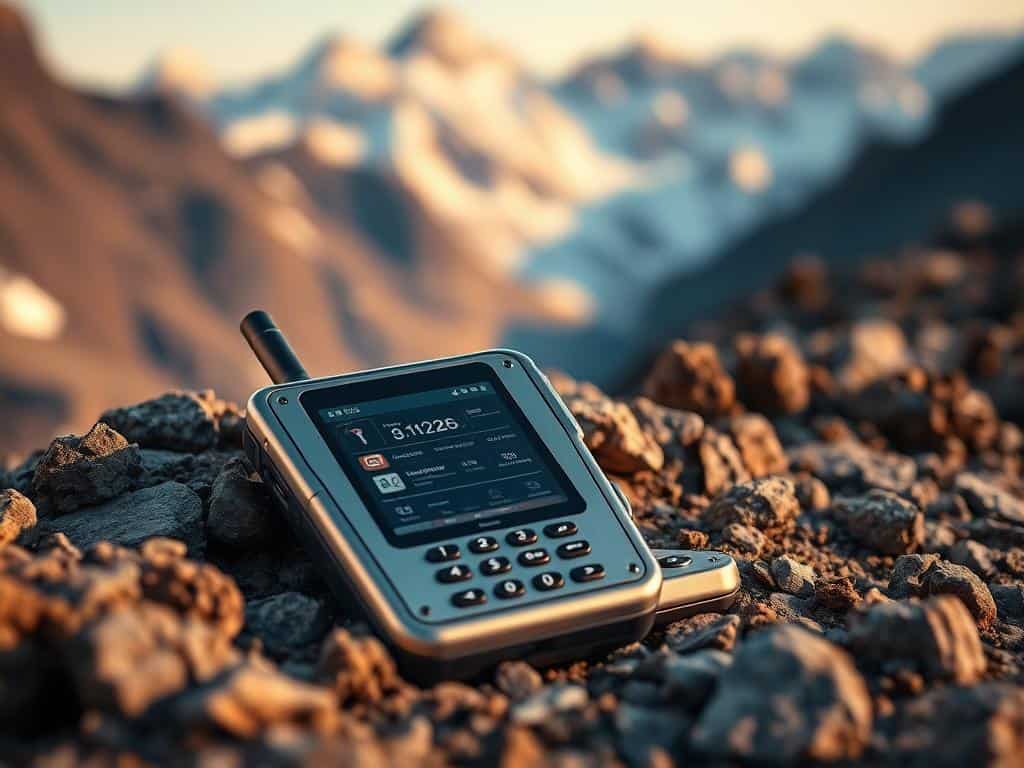
Satellite phone technology is key for global communication, mainly in remote areas. These devices connect to satellites orbiting Earth. This ensures users can talk and send data, even in tough conditions.
They are vital for many, from adventurers to emergency teams. This makes satellite phones essential.
How Satellite Phones Work
Satellite phones send signals to the nearest satellite. This satellite then sends the signals to Earth’s ground stations. These stations connect the satellite network to regular communication systems.
This setup makes global communication smooth. It lets calls reach their destinations, no matter the location.
Components of Satellite Phone Systems
The main parts of satellite phone systems are satellites, user terminals, ground stations, and network centers. Each is vital for keeping connections strong. For instance, the Iridium constellation has 66 satellites for reliable global talks.
User terminals let people make calls. Ground stations and network centers make sure all messages get through. Knowing these parts shows how advanced satellite tech is.
Satellite Phones 2025: What to Expect
The future of satellite phones looks bright, with new tech on the horizon by 2025. T-Mobile and Vodafone are leading the way, working to make these phones more reliable and affordable. They aim to blend satellite tech with regular smartphones, making it easier for everyone to stay connected.
For example, T-Mobile’s Starlink service is being tested, and Vodafone has already made a satellite-enabled video call. These steps show how they’re tackling the problem of poor coverage in some areas.
Technological Advancements
Big names like Apple and AST SpaceMobile are investing heavily in satellite phone tech. They’re working to add satellite features to everyday phones. This could help people in over 350 million “not spots” worldwide, where mobile services are scarce.
While this tech is a big step forward, there are some hurdles to overcome. Data speeds might be slower, and there are specific requirements for visibility. Yet, the progress in satellite phones is set to improve emergency calls and connectivity in remote spots.
Market Trends and Growth
The demand for satellite phones is on the rise, mainly for use in civil situations. This is because people need reliable ways to communicate during disasters and emergencies. The market is expected to grow, reaching $808.5 million by 2031.
This growth is driven by satellite phone use in defense and disaster management. It’s also because of new tech that makes these phones smaller and cheaper for users.
Benefits and Limitations of Using Satellite Phones
Satellite phones are vital in many situations. They are key for emergency calls when regular phones don’t work. This is true in natural disasters or remote places.
Emergency Communication
Having a way to call for help in emergencies is essential. When disasters hit, local phones often go down. But satellite phones keep working, helping people get help.
Many stories show how important these phones are. Travelers have used them to call for rescue in emergencies. This proves their value.
Connectivity in Remote Locations
Satellite phones are great for staying connected in the wilderness. They work where cell phones don’t. This is a big plus for outdoor lovers and workers in remote areas.
But, there are downsides. Using a satellite phone can be expensive. Also, bad weather or mountains can block the signal. This makes them less reliable in some cases.
Conclusion
Satellite phones have become key for many, like the military, disaster teams, and remote workers. They offer global coverage, letting users stay connected where regular phones can’t. For example, Vodafone made a video call from nowhere, showing what’s possible today.
Thanks to satellite tech, we can now reach farther and connect better. Mobile companies are working to cover “not spots” with satellite services. Big names like Vodafone and Apple are investing in satellite tech, aiming to help more people worldwide.
Though they cost more than regular phones, satellite phones are worth it for their reliability. They give people and groups confidence and peace of mind when they’re far from home. As our world gets more connected, satellite phones will keep being essential for staying in touch from anywhere.